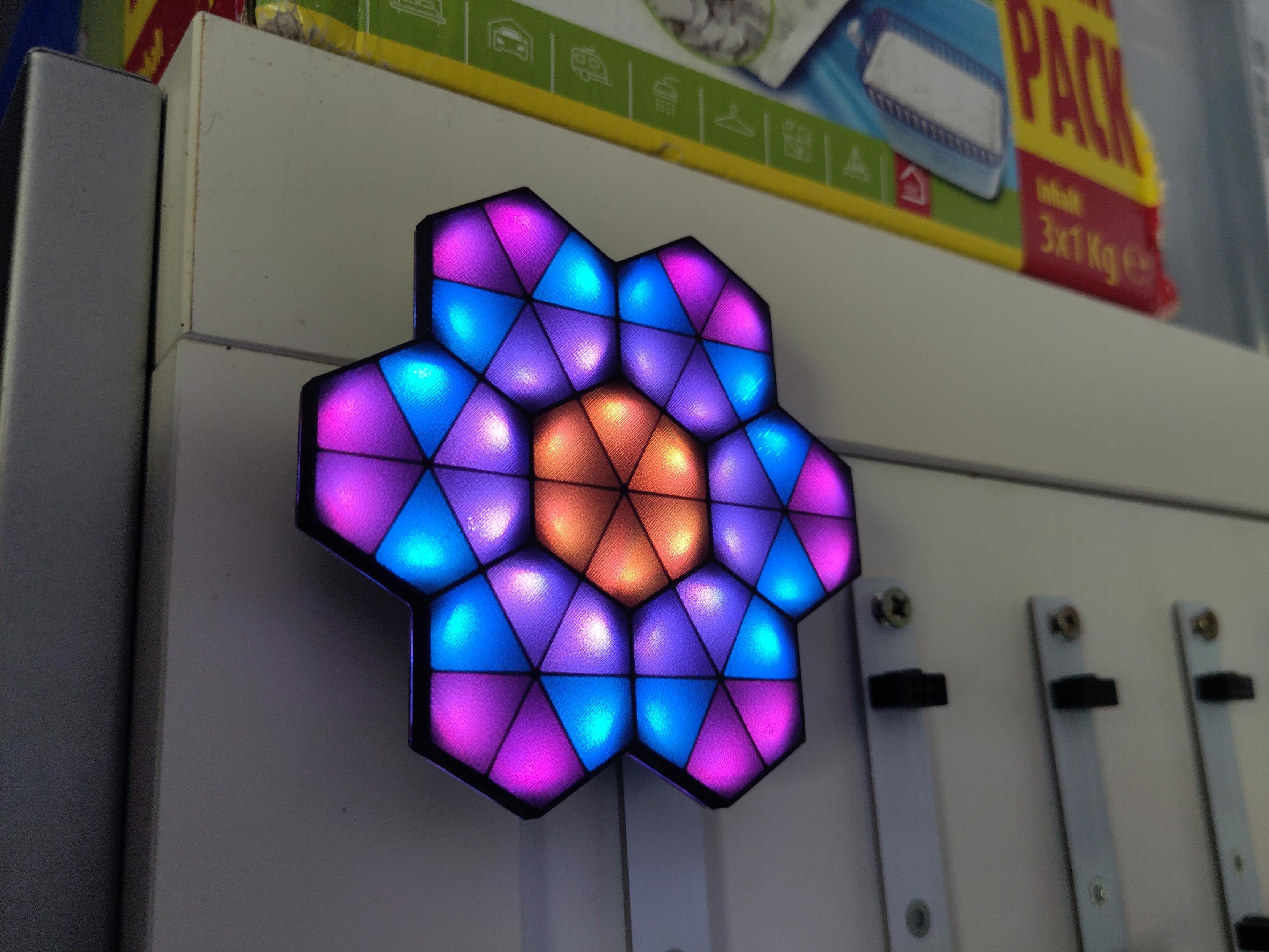
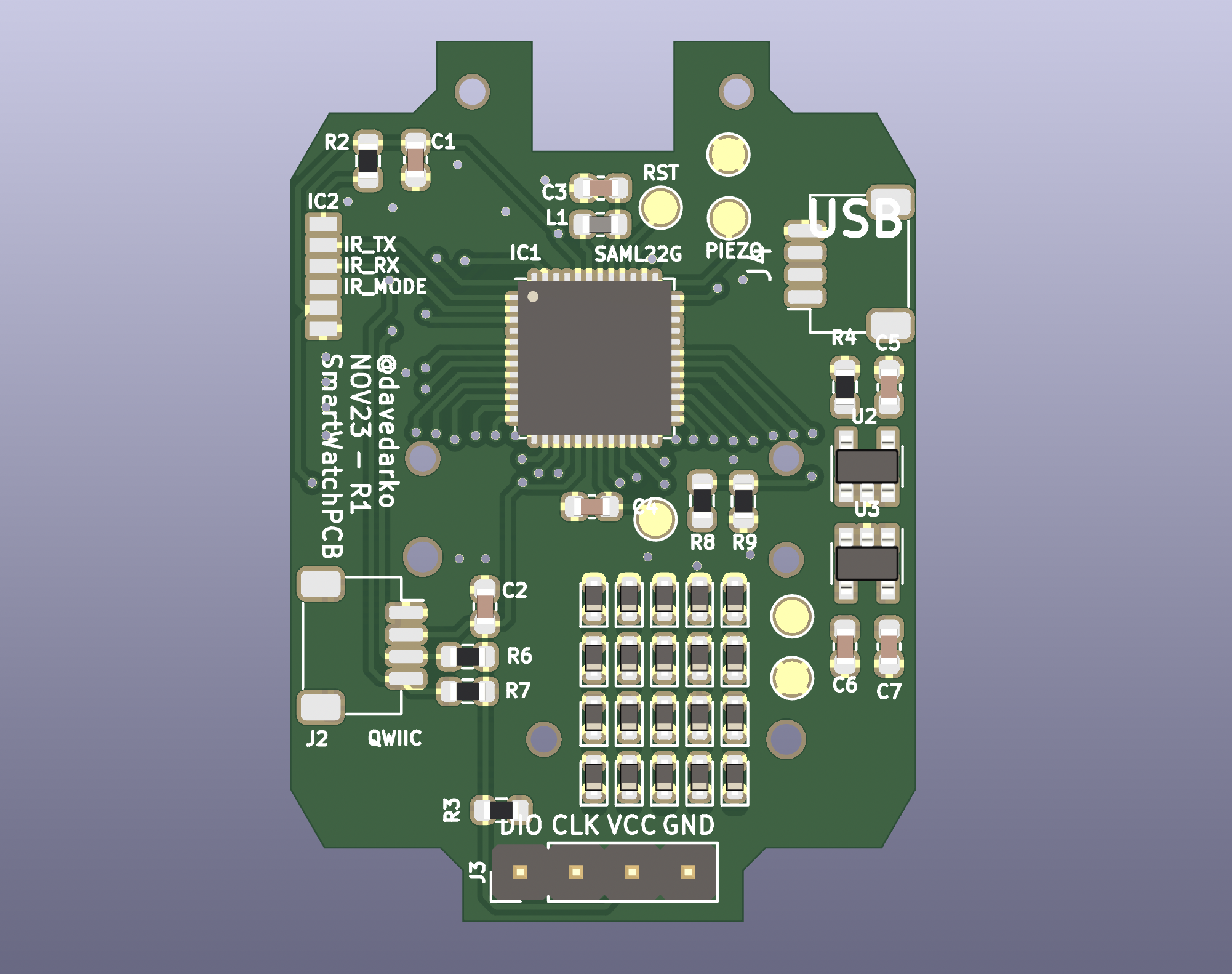
hexagonal neopixel tiles | Smol Version with 42 LEDs
2026-05-28 20:39:54
I have a CH32V003 version.with 42 LEDs now and could not get Arduino to work with it before. I now looked into it again and am very close to uploading to the SAO from Arduino.
First I had to make the compiling for the Adafruit_Neopixel library work. There's an issue with the hardware flag. You have to change the library slightly to work with the arduino core.
Change anything in .c and .h filefrom
defined(ARDUINO_ARCH_CH32)
to this:
defined(ARDUINO_ARCH_CH32) || defined(CH32V00x)
Then I had to change some doubles to floats variables, hopefully all the libs still work. Also added a const to the fixed variables to move them to Program Flash.
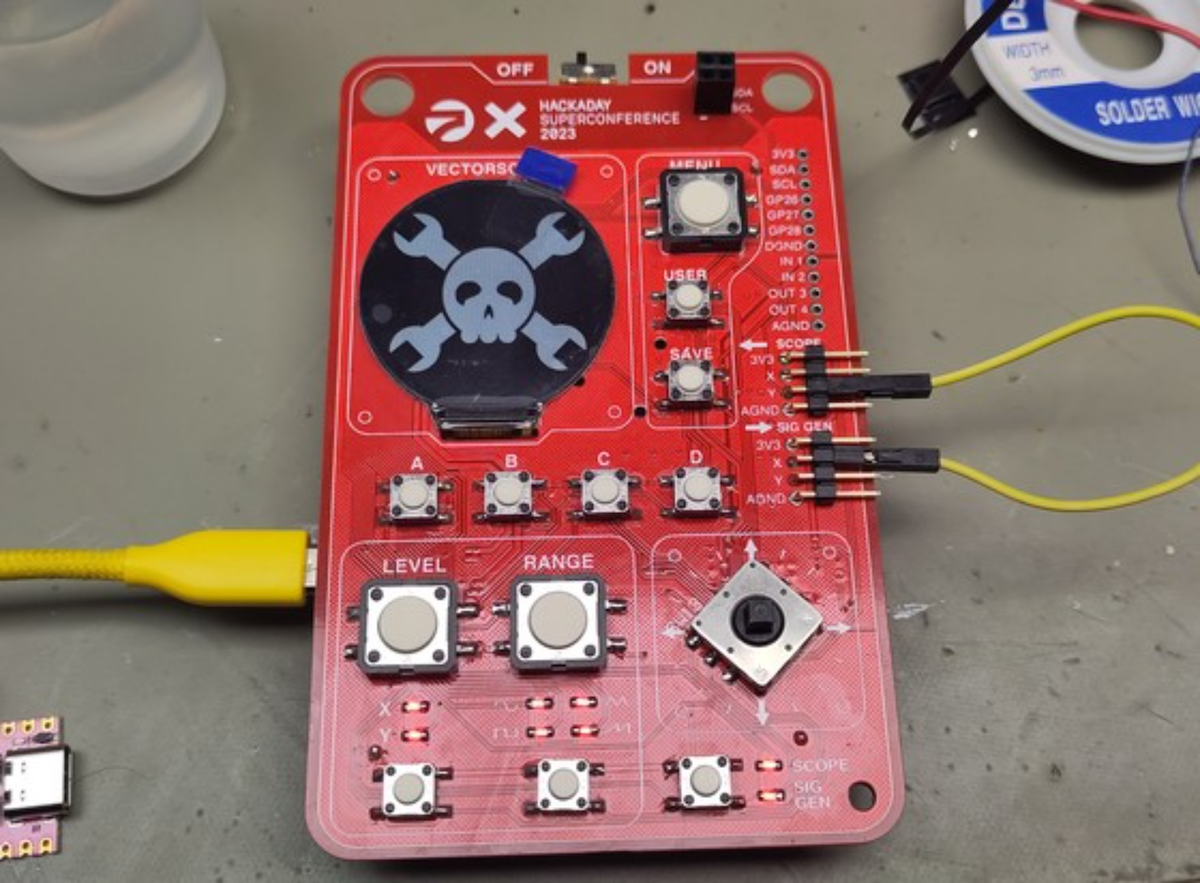
The Arduino compiler is missing a flag for the CH32V003 to run with the internal 48MHz oscillator - something I later noticed by testing the hackaday CH32V003 supercon addon with a simple 1sec blink sketch. Reading this issue I thought it was fixed, but the blink don't lie. So following the issue I added the following flag to the compiler steps. This will basically break compiling for every other CH32 chip though, so be aware.
Uploading with the linux computer works, but with my mac I run into a libusb problem, that complains about the installed libusb architecture of my computer being wrong. After a few "chatGPT tells me to install new homebrew versions with rosetta" episodes I just gave up. You can also just upload the binary file you can export from arduino onto the CH32V003 by using minichlink.
./minichlink -w whateverfile.ino.bin flash
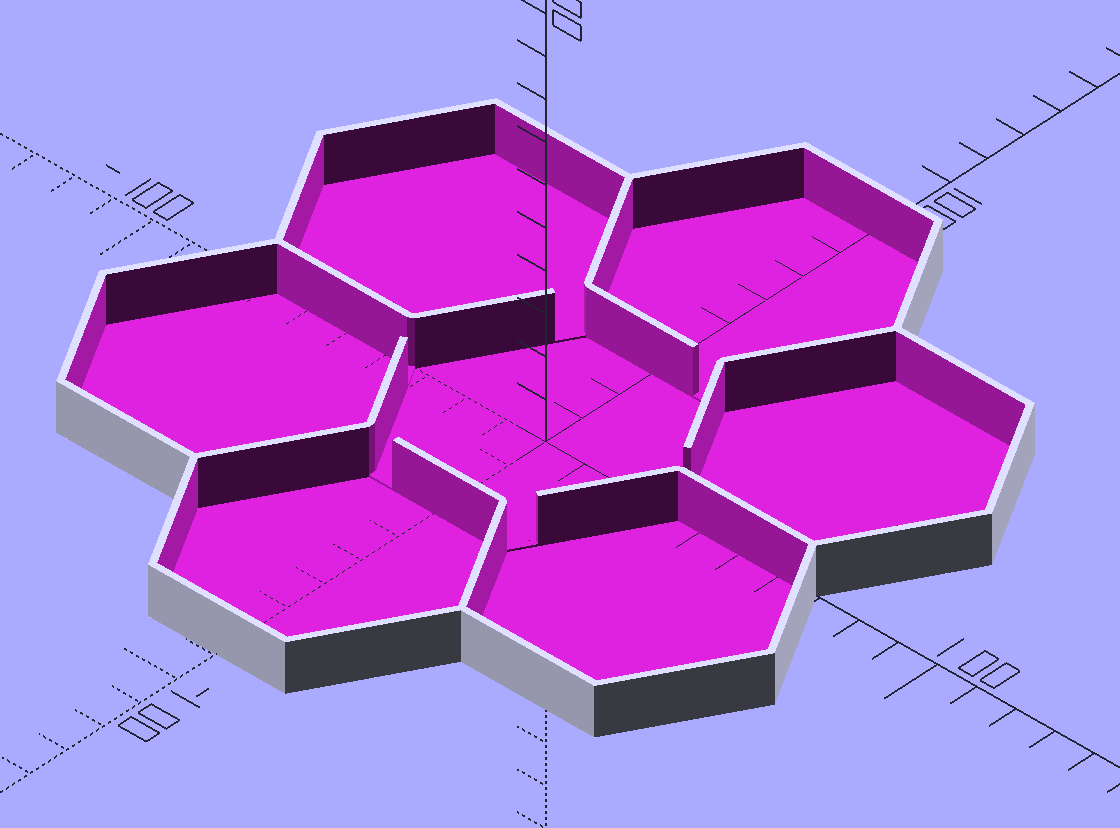
Side note: I had to again update the LED arrangement array
price tag project boxes | and I'm reverting to analog lol
2026-05-07 11:49:02
So long story short, the tags were awesome, but somehow they lost the image data after a bit or the data on the server got compromised somehow. This project felt too static for displays that can easily update daily or more with fresh data, so I'm okay with that. Already found a good home for them, at least a home with money to spend on them.
hexagonal neopixel tiles | revived for congress 38C3
2024-12-24 20:53:45
We needed some decorations for congress and I remembered that I have these PCBs flying around somewhere. Too bad I couldn't find all 50 PCBs, so I came up with making some with LED strings as well - with folding the strip carefully, you just have to solder the cable on.
LEDodecahedron | silly idea
2024-09-24 14:36:37
since the IS31FL3733 is not recommended for new designs, why not redesign the LED PCBs with the IS31FL3741. gotta research that - would mean more LEDs (117 instead of 64).
According to my table, I would get 2 more rows around the cube with 106 LEDs.
There's only one ADDR pin here, so you can have a maximum of 4 panel adresses, but definitely managable to address half a cube with the RP2040 that has two I2C channels.
COVID-19 | SAO Simple Add-on | #37C3 - Congress
2023-12-26 00:00:55
First off all, I am very sorry for giving you a bag with freely flying resistors in it and that you have to read the value in the darkness of Congress! In parts this is @Alex 's fault, he once gave me bags of 0805 resistors and I recycled them in this projects, as I only want to use 0603 parts most of the time.
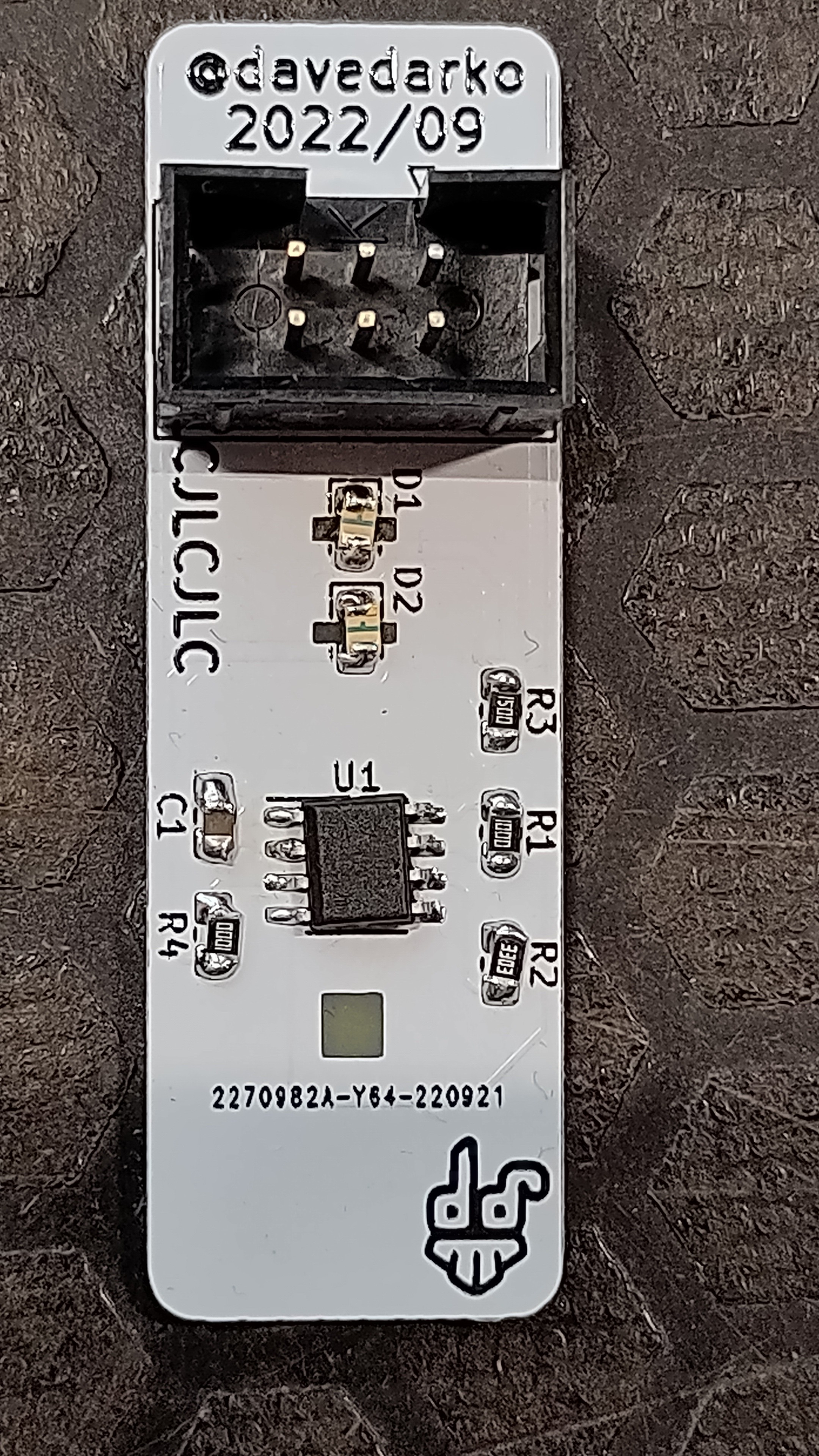
Anywho, there might be a 330k resistor in there instead of a 390k resistor, so according to this fine website, it should blink 3 times per second, instead of 2 times.
The first version was doomed from the beginning, since I had no diodes on the keys. I also swapped the USB micro socket with a JST-SH socket and made a small adapter board instead. Let's see how far I get this time.
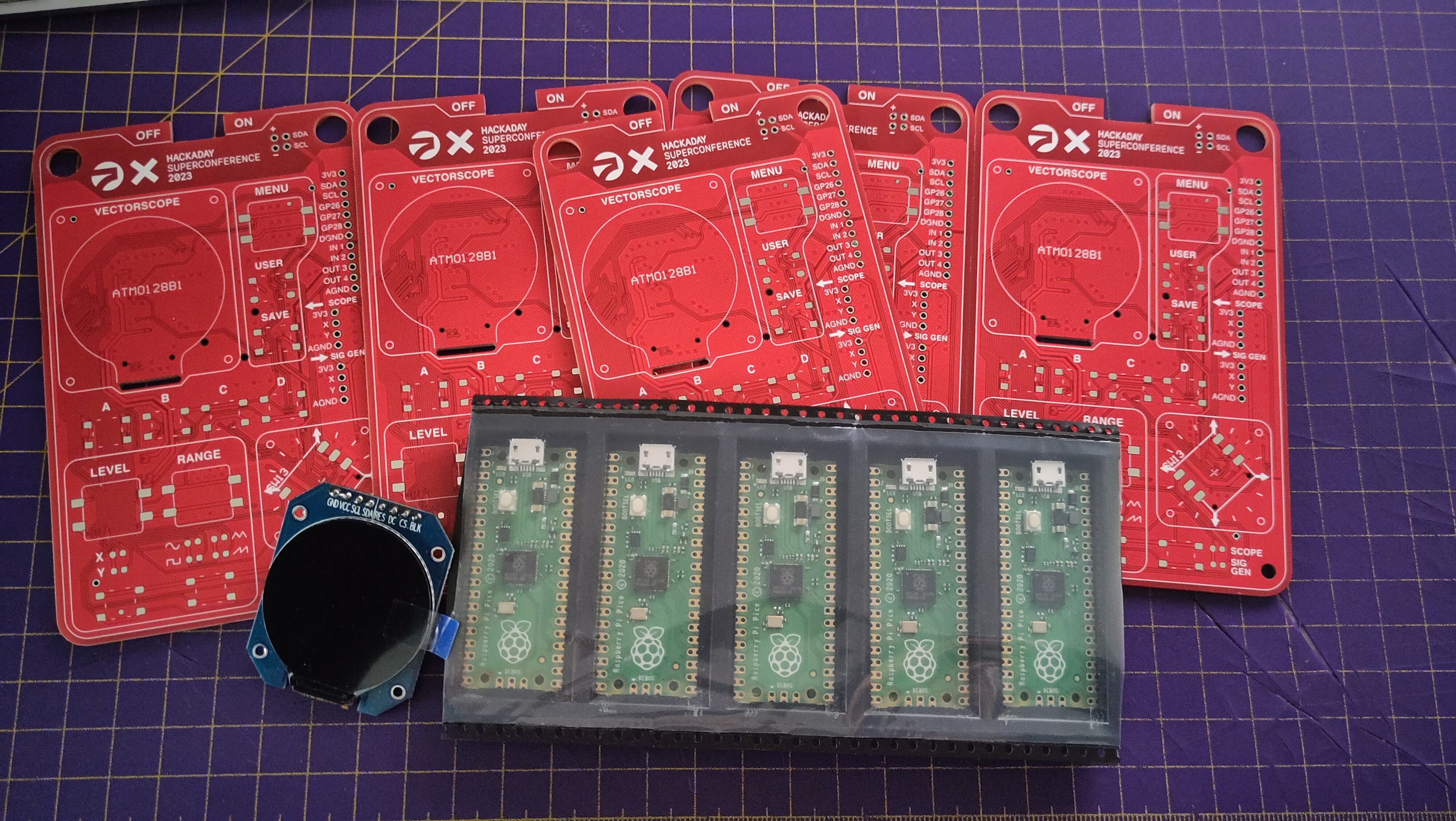
Me building projects from hackaday.io | Supercon 23 badge
2023-10-28 23:24:14
Don't have all parts yet, but enough to get started. I've send two PCBs to @Alex as well - but I have a head start ;)
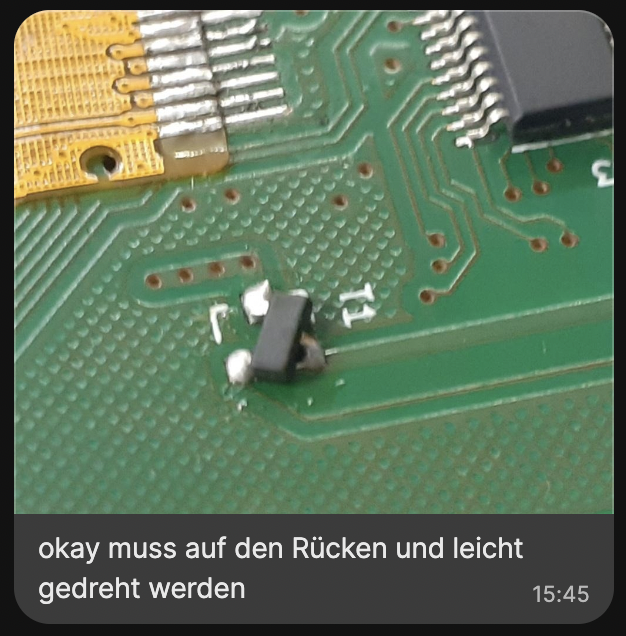
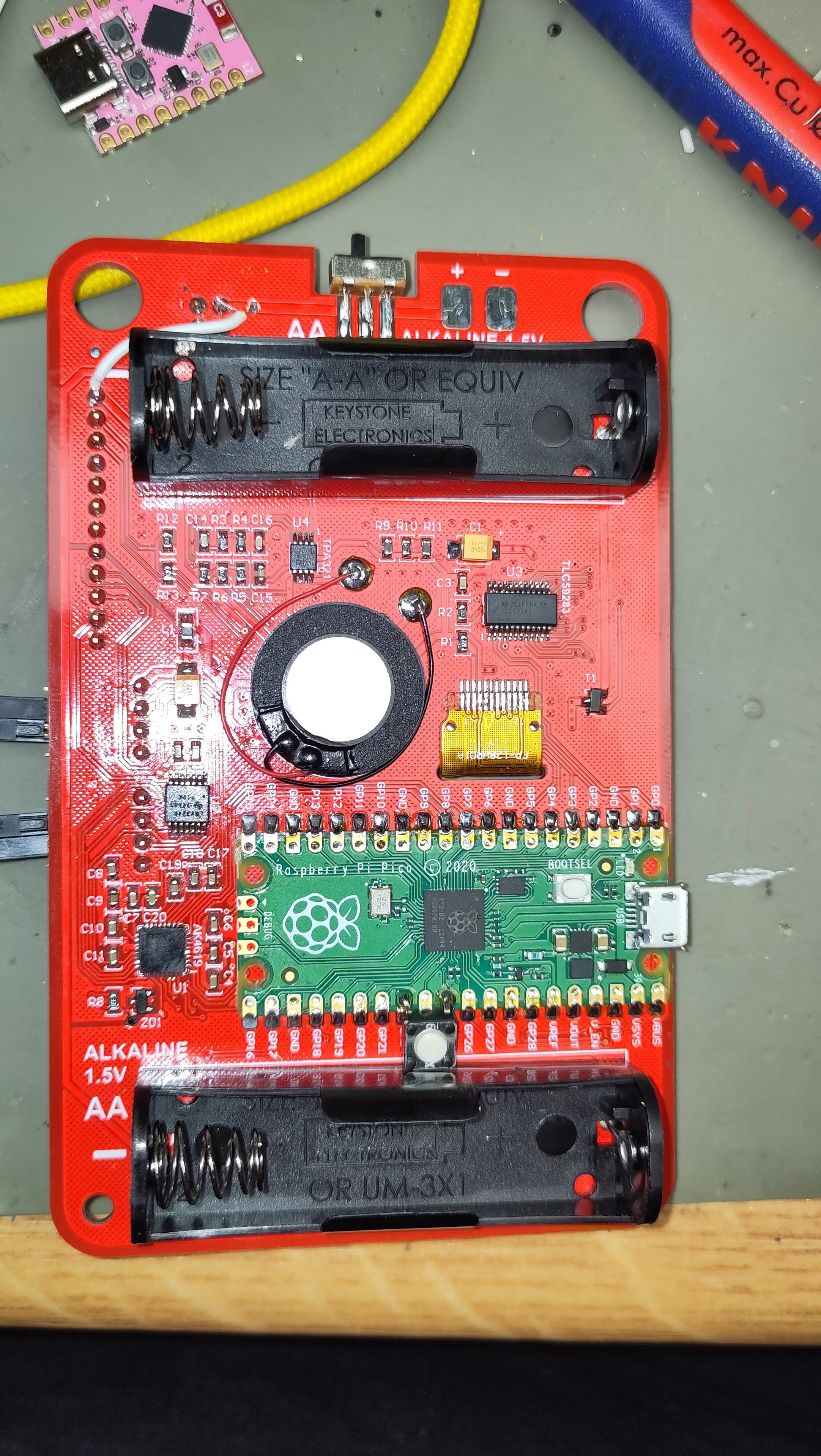
We had to figure out some errata ourselves, since we've ordered boards that weren't the final version apparently. The BOM itself is also different now. The MOSFET in our version had to be soldered on in dead-bug style and turned by some degrees.
The badge worked in the end and I did two small modifications: the simple add-on was powered from the batteries, I changed that to also get 3.3V from the regulator. There was also a good use-case for an additional reset button, so I did that.
The badge worked great after the latest firmware was pushed on it, very happy with the result!
Been a minute and I've currently found some motivation to work on animations and make the code run faster plus also mapping things finally.
Found out the ESP32 only has a 64 byte hardware buffer for I2C and that I need to use endTransmission after 63 bytes, stole some adafruit code for I2C oled displays and put it in the library I'm currently using for the IS31FL3733.
Flipper At Home | programming menu and hardware options
2023-04-28 11:03:33
For 2-3 evenings I was working on "perfecting" the look of the menu on the small display, until I realised that the flipper zero has four menu styles (that I know of) https://chaos.social/@davedarko/110255372561304158 . I got to a point where I was very pleased, having a "128x64" pixel area in orange, centered in a slightly brighter orange 160x80 area, which is the display size.
The other day I saw the LilyGO T-embed price reduced to 28€ with shipping, I had my eye on it for a while and decided to buy it as a second candidate. Keep in mind that it usually goes for 42€ instead. The external dimensions are almost the same and I can use the 320 x 170 as a 160 x 85 display by just doubling up the pixels.
Flipper At Home | first order arrived
2023-04-18 21:31:31
Today I received two ESP32-C3 boards, one with native USB CDC controller connected to the USB plug and one with a CH343 connected, plus two LCD boards, because why not, they were cheap! (I also got that fish console from prev post, why did I buy that??)
I'm a bit irritated on why there are two versions, why would you want a board with an extra serial converter? To be able to use the GPIO pins 18 and 19, which are the USB pins for the integrated CDC? Well let's see what and how many pins I need then.
I found this pinout diagram and expanded it, so it shows what pins are the LEDs connected to.
With the mod connecting the button of the encoder to the switch on the PICO through a diode, I only need a reset button that's reachable so I can easily upload new programs. There are two pins unpopulated (13 and 16), that are able to be routed as I2C pins, which means I can add a qwiic connector on the board somewhere!
Fixietube - Fake Nixie Tube displays | unix time and some miliseconds
2023-01-29 21:57:57 Finally managed to solder some more boards so I can put them into this 3d printed case, printed on a CR-30 belt printer with rainbow filament. Now I'm only sitting on 48 more jam jars, I guess. Well they sit in a shelf.
The displays are controlled by a D1 mini (with USB-C socket!).
I2C sequencer thing | first prototype is programmable
2023-01-11 00:28:05
COVID-19 | SAO Simple Add-on | back of latest edition
2022-12-30 15:01:21
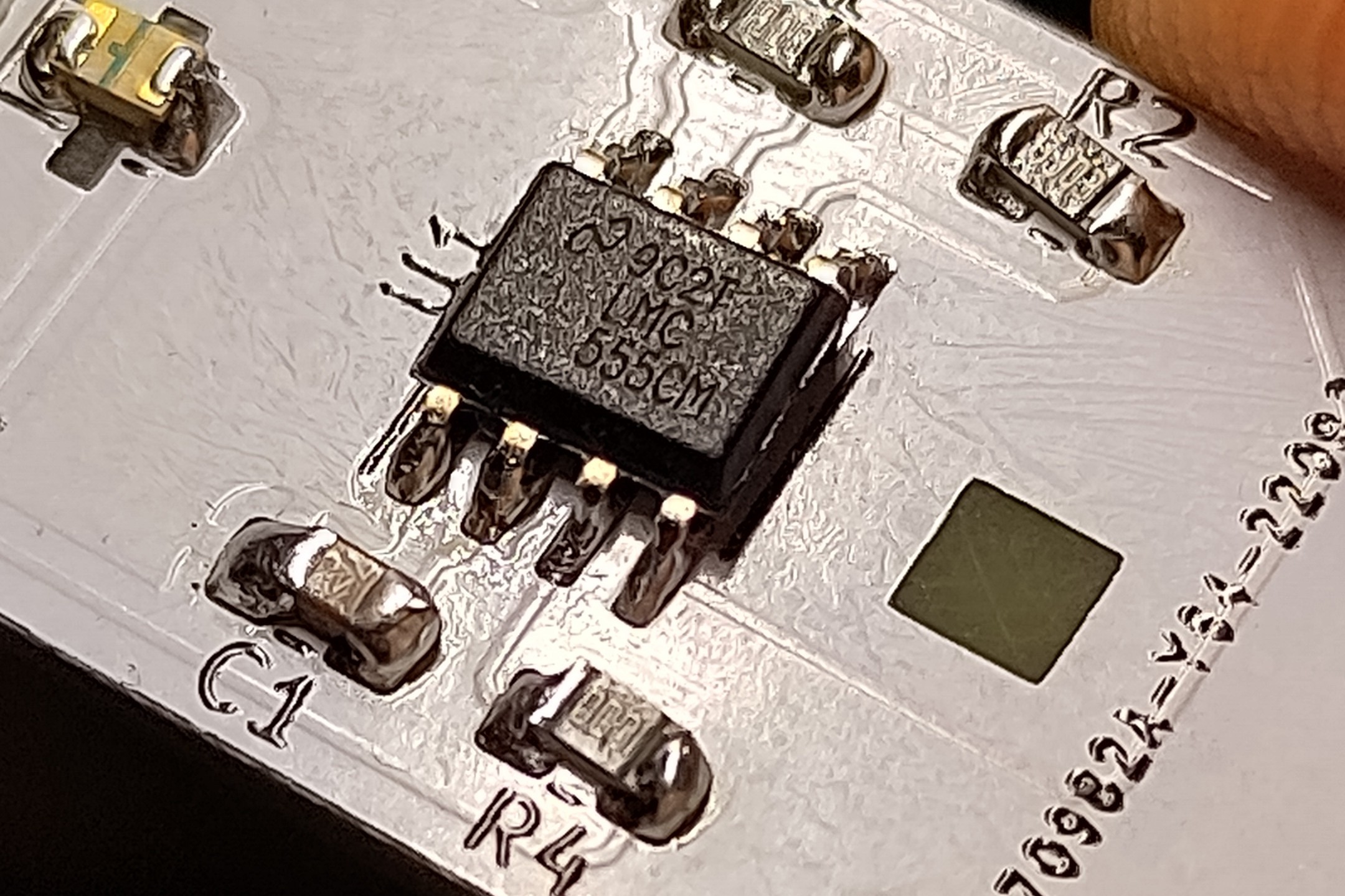
The 555 timer has a chamfer to indicate the side of thr first pin.
LEDodecahedron | gave a little talk at hacking in parallel
2022-12-27 18:51:43
There are some "between the years" events happening in Europe that follow the spirits of the chaos communication congress that got cancelled this year. In a small venue with 400 people I gave this talk about my Dodecahedron! :) Was a fun first talk of this kind for me.
getting the pico usb host example compiled correctly
2022-12-01 20:51:24
I couldn't find the picoprobe with openOCD until I flashed it with a pre compiled picoprobe.uf2 file instead of compiling it myself. If it works, it works - I guess.
found the related issue where I got the working picoprobe.uf2 got from: https://github.com/raspberrypi/openocd/issues/71 Basically pointing to this site where you can download the probe firmware:
Had some trouble compiling the openOCD version for the picoprobe on the M1 macbook. This is based on a thread on github and the official guides, plus some blog posts that basically copied from each other.
#install additional brew libraries
brew install libtool automake texinfo wget gcc pkg-config libusb
# some path magic so compilers know where to look for stuff export PATH="$(brew --prefix)/opt/texinfo/bin:$PATH"# download openocd files with picoprobe branch
git clone https://github.com/raspberrypi/openocd.git \
--branch picoprobe --depth=1
cd openocd
./bootstrap
# this enables the picoprobe and deactivates other modules that fail to compile otherwise
CAPSTONE_CFLAGS="-I$(brew --prefix)/include" \
./configure --prefix="$(brew --prefix)" \
--enable-picoprobe --disable-presto --disable-werror --disable-openjtag
make -j4
# this will probably overwrite your current installation
# and will break openjtag
make install
# optionally remove the installation folder
cd ~/git
rm -rf openocd
a "true" in system programmer | so this didn't work out so well
2022-11-21 17:15:11
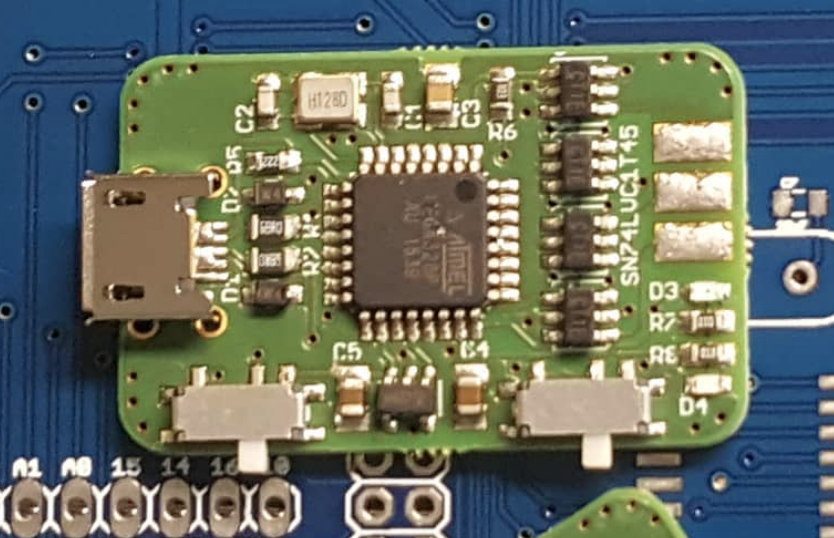
Image of PCB shows shortcuts on PCB connector that have been later fixed. Small board of 2cm x 4cm
twitter back log from 2020-10-24
"Time flies when you're trying to have fun with a two year old project. This is my take on an ISP for AVR and Attiny chips, than can power the target with 3V, 5V or translate to the target's voltage. I always wondered why the old version was sometimes shorting out and now I know.
The version before had POGO pins soldered directly to the pads (yes, they were mirrored for that). They were replaced with a "standard" 6 pin socket and this works fine. I was able to program plenty of targets with the new programmer. They just would not start.
With the POGO pins I never noticed that, because as soon as I was done programming with it, the target was powered on it's own and started fine. But now the reset line was held LOW because the reset pin turned into an INPUT.
The level-shifter I'm using is not bidirectional, but the direction of communication can be selected. So I lifted the pins and rewrote the USBASP firmware to change the direction whenever the red LED turns on and off (basically). Now nothing works anymore and I'm asking myself:
Should I change the schematics and find a bi-directional tri-state level-shifter? Or should I scope it and see if it's fixable with some delays?"
It seems to just work with the 5V circuitry and boots normally. Maybe it's behaving weird when it's 3.3V on the receiving side. Hm nope, also works with 3.3V. Maybe it was the target then, need to remember what I wanted to program back then.